The problem
The founders built the brand entirely on Instagram. No paid agency, no retail — just weekly drops on Tuesday at 7pm, photographed on friends, sold out in a night. By early 2026 the audience had crossed 180,000 followers and the DM inbox had become unusable. On drop day, two people with two phones could not get through the queue before the next morning.
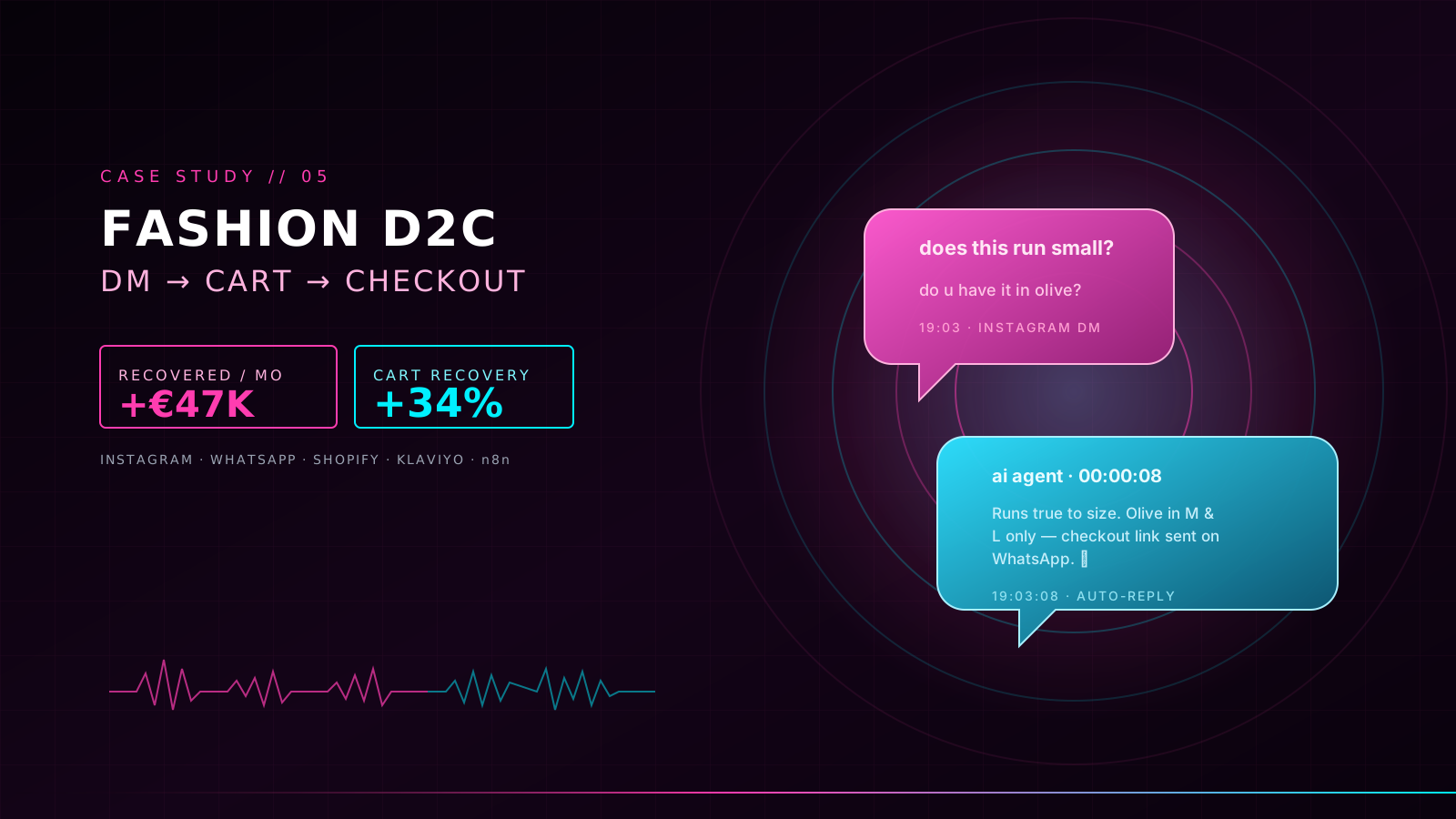
Worse, the DMs were where the actual selling happened: 'does this run small?', 'do you have it in olive?', 'can I pay cash on delivery?', 'is this still in stock in M?'. Every unanswered question was a lost sale. The checkout abandonment rate sat at 74% — mostly from mobile shoppers who started a cart from a Story and never came back.
The founders had tried a classic chatbot. It made them sound robotic, got the size chart wrong twice in one week, and trained the audience to not message the brand anymore. That is the worst possible outcome for a D2C label whose entire moat is feeling personal.
What we built
2026 is finally the year AI agents sound like a real brand and not a 2019 chatbot. We trained a single agent on every product page, the size chart, past customer-service transcripts, and 400 real DMs the founders had replied to themselves — so the voice matches exactly. Then we plugged it into the three channels that actually drive revenue: Instagram DM, WhatsApp, and the Shopify checkout.
- Instagram DM agent that reads the attached Story or Reel, knows which product the customer is asking about, and answers with the right photo, size availability and price in under 8 seconds
- WhatsApp commerce flow: the agent takes the full order (size, color, address, payment method), confirms in natural Romanian, and creates the Shopify order with the right UTM attribution
- Size advisor that asks two questions (usual size + fit preference) and recommends a size from historical return data for that specific SKU — cuts size-related returns in half
- Abandoned cart rescue across all three channels: Email at T+1h, WhatsApp at T+4h (only for opted-in numbers), Instagram DM at T+24h — each with a different message, each with a one-tap checkout link
- Drop-day mode: on Tuesday 6:55pm the agent flips into high-traffic mode, queues gracefully, stock-checks every reply, and escalates complaints or press inquiries to a human in under 60 seconds
- Back-in-stock and waitlist signup by DM — the agent remembers what size a customer asked about and messages them the moment a return puts it back on the shelf
- Weekly brand voice review: the founders get a digest of 20 random AI replies and flag anything off-tone; those become new training examples the following week
The results after 90 days
In the first three months the agent handled 232,000 conversations across DM and WhatsApp. Median response time dropped from 7 hours to 46 seconds. Abandoned cart recovery went from 11% to 45% — the WhatsApp rescue alone outperformed the entire email program.
Attributed revenue directly from DM-to-checkout flows added €47,000 per month on top of the brand's existing sales, without spending an extra leu on ads. Returns dropped 28% because customers are now getting a real size recommendation instead of guessing from the model's height caption.
The founders stopped doing DM shifts at 11pm. One of them went back to designing full-time; the other now reviews the AI's brand voice for an hour on Monday and calls it 'the best junior I've ever hired'.
What we'd warn other brands about
A DM agent that sounds generic will actively hurt a small fashion brand — the voice has to match. Budget the first two weeks for voice training, not automation logic.
Instagram's API is rate-limited and strict about automation. Getting the right Meta Business access and staying on the right side of policy is 30% of the project; the AI is the easy part.
Never fully replace the founder on drop day in year one. Keep them looped in on complaints and press — that's where the brand is actually built or broken.
"I used to dread Tuesday nights. Now I watch the drop sell through on a dashboard while the agent handles the messages I used to type at midnight."
— Co-founder & creative director