The problem
The agency placed mid-to-senior engineers — DevOps, staff backend, lead frontend, ML — into Romanian product companies and into the Cluj offices of foreign outsourcers. In 2024 they could fill 14 roles in a quarter with five recruiters and feel proud. By the end of 2025 the same five recruiters were filling nine, and the founder was personally writing intro DMs at 1am every Friday because nobody else had time.
The numbers told the same story from every angle. Average time-to-shortlist had crept from 9 days to 19. Cold-outreach response rate on LinkedIn had collapsed from 31% to 16% — every other agency in town was spamming the same 600 senior devs with the same 'exciting opportunity' template. Voice screens were booked through three back-and-forth emails per candidate, and 38% of the calls that did get booked were no-shows because the recruiter had already moved on to the next req.
Hiring managers were losing patience. The agency's NPS with clients dropped from 71 to 43 in twelve months — not because the candidates were worse, but because the slate took two weeks instead of three days. Two long-term clients quietly started a parallel direct-sourcing function. The founder knew that if 2026 looked like 2025, the agency would be a hiring department for two of its own clients within a year.
What we built
By Q1 2026 the pieces a recruitment agency actually needed had finally landed in the same week. OpenAI's smaller realtime voice models could hold a 12-minute structured conversation in Romanian, English and a bit of Hungarian without making a senior engineer roll their eyes. Browser-based agent runtimes could drive a logged-in LinkedIn Recruiter session safely on a recruiter's behalf, inside their own profile, without any sketchy scraping. And ATS vendors had finally opened the bidirectional webhooks that let an external agent treat the ATS like a database, not a black box.
We wrapped all of that around a single per-req AI agent. The agency kept Greenhouse as the system of record, kept LinkedIn Recruiter as the sourcing surface, and kept the human consultants as the people who own the client relationship. We replaced the typing — the part of the job that nobody got into recruitment to do.
- Per-req intake call with the hiring manager is recorded; the AI agent generates the ICP, the must-haves, the nice-to-haves, the deal-breakers, and a tone-of-voice guide for outreach — reviewed and approved by the recruiter in 5 minutes instead of 45
- Multi-source sourcing: the agent runs scoped searches across LinkedIn Recruiter (in the recruiter's session), GitHub commit history, Stack Overflow profiles, public conference talks and Romania's IT meetup pages — surfacing candidates the standard LinkedIn search would never rank
- Personalized first-touch DM in Romanian or English, referencing something specific the candidate actually shipped — a recent talk, a popular repo, a tech stack migration mentioned on their profile — never the word 'opportunity'
- AI voice screen: a 12-minute structured call in the candidate's preferred language, covering motivation, current comp, notice period, remote vs hybrid preference, and three role-specific technical anchor questions; transcript and structured scorecard land in Greenhouse automatically
- Smart calendar coordination: the agent owns the back-and-forth across the candidate's, recruiter's and hiring manager's calendars — including across time zones for clients in Berlin, Munich and Eindhoven — and handles reschedules without a human ever opening a calendar app
- Auto-generated candidate brief for the hiring manager: 1-pager with strengths, risks, comp expectations, notice period, two-line motivation summary, and a 90-second AI voice highlight from the screen so the hiring manager hears the candidate, not just reads about them
- Candidate-care thread: status updates at every funnel stage on WhatsApp in the candidate's preferred language — no more 'I haven't heard back, am I still in the process?' emails on day 11
- Founder dashboard: per-req heat map (sourced / contacted / replied / screened / shortlisted / offered), per-recruiter productivity, per-source response rate, per-client time-to-fill — refreshed every 15 minutes
The results in Q1 2026
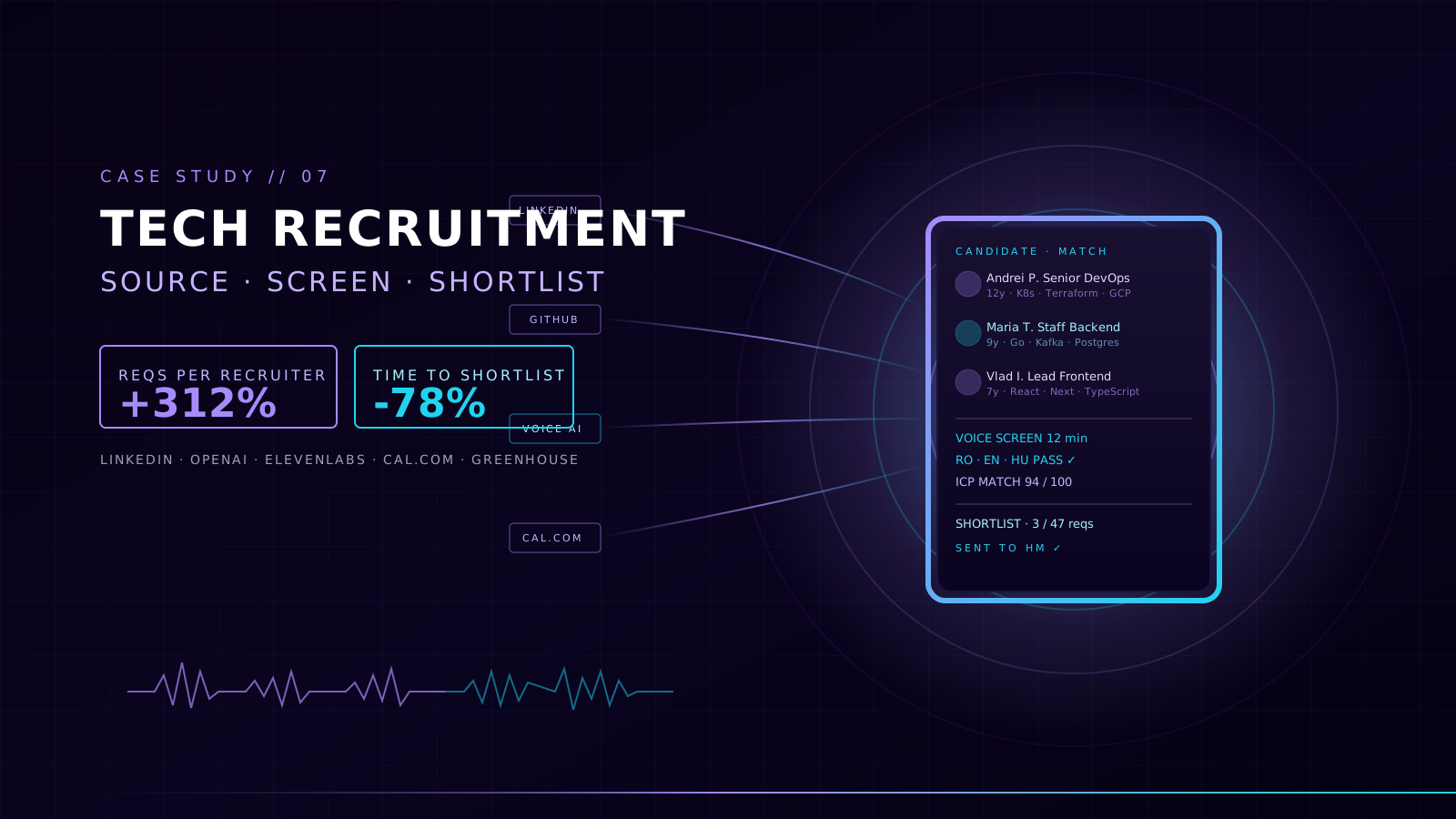
The agency filled 47 senior IT roles in the quarter, against an internal plan of 22 and a five-year quarterly average of 16. Reqs filled per recruiter went from 1.8 to 7.5 — a 312% lift. Time-to-shortlist collapsed from 19 days to just over 4. Response rate on first-touch outreach more than doubled, from 16% to 37%, because the messages finally referenced something real about the candidate.
Voice screens went from a bottleneck to a non-event. The agent ran 412 voice screens in Q1 — none of which a recruiter had to schedule, conduct, or write up. Show-up rate on AI-booked screens was 71%, almost twice the 38% the agency used to hit with email-coordinated screens. Hiring managers now receive a brief and a 90-second voice highlight; six of the agency's top ten clients have explicitly stopped asking for a second introductory call before the technical interview.
The unexpected upside was retention — of the recruiters. Two senior consultants who had given notice in November rescinded after the first month on the new workflow. They told the founder the same thing in different words: they had become consultants again. The agency promoted both into client-lead roles, hired one analyst to babysit the agent's edge cases, and stopped advertising the recruiter role on its own careers page.
What we'd do differently
The first version of the agent auto-rejected any candidate with an ICP match score below 70. Inside two weeks it had silently passed on a brilliant principal engineer whose CV listed 'Cobol' alongside 'Rust' (legacy bank background, current weekend rust contributor) and the score model couldn't square the two. We changed the rule: the agent never rejects, it only ranks. Anything below threshold goes into a 'manual review' bucket the recruiter scans once a day. The hours lost to the review bucket are negligible; the candidate we almost missed is now placed at the agency's biggest client.
We also kept the hiring-manager debrief human-led. The agent listens, takes notes and drafts the next-step email, but the consultant runs the conversation. Hiring managers tell us things on debriefs they would never put in writing — politics, budget anxiety, internal candidates — and a recruiter who hears that voice-to-voice keeps the relationship in a way an AI summary never will. The drafting time savings on the email are still 80%; we left the listening to the human.
"Our recruiters used to be glorified LinkedIn typists. Now they're consultants again — they spend the day with hiring managers, not chasing senior devs who never reply."
— Founding partner, recruitment agency