The problem
Residential renovation in Romania in summer 2026 is a speed game dressed up as a craft business. Homeowners discover a contractor the same way they discover a restaurant — a Reel of a thermo-insulated facade, a before/after of a kitchen gut, a story reply at 22:40 after the kids are in bed. The intent is hot for about twelve minutes. Then they message the next three contractors who showed up in the same Explore scroll. Whoever answers first, with a real slot for a site visit and a coherent next step, usually owns the job. Whoever answers tomorrow morning owns the apology.
Our client ran a serious operation: envelope and thermo-insulation crews, an HVAC partner bench, interior fit-out teams, a small design desk, and a sales pair who still lived inside WhatsApp and a shared Google Sheet. Instagram had become their biggest top-of-funnel — paid Reels plus organic before/afters — but the inbox did not care that estimators were on a roof in Voluntari. By Q2 2026 they were measuring a median first reply of 7 hours on Instagram DMs and 4.5 hours on WhatsApp. After 19:00, roughly 64% of high-intent messages sat unread until the next workday. Spot audits with the founder found that competitors who replied inside the first hour were winning roughly two out of three of those overnight leads.
The lead itself got messier in 2026. A growing share of inbound was not a vague 'how much for a bathroom?' — it was 'we have a PNRR Investiția 7 / RePowerEU voucher track, we need thermo + windows + possibly PV-ready detailing, and the works have to land before the national completion cliff.' The 31 August 2026 deadline pressure around PNRR energy-efficiency household schemes turned every summer week into a scramble: homeowners shopping for enrolled contractors, asking for checklists, photos of prior work, and a site visit this week, not next month. The sales team was answering product questions with one hand and hunting cadastral extracts and energy certificates with the other.
Then there was the paperwork tax that never shows up in a Reel. Autorizație de construire / notificare for structural or facade works, energy performance certificates, neighbour agreements, e-Factura B2C on every consumer advance, ANPC-facing contract language, and a quote that had to survive a second look from a sceptical spouse. The firm was good at the craft. It was losing the race at the first message — and that is the most expensive place to lose in a high-ticket, local service business.
What we built
We did not replace the estimators or invent a magical price for a 120 m² facade from a DM. We built a speed-to-lead layer that owns the first conversation, the qualification, the calendar, and the dossier prep — and stops the second a human has to price, promise a finish date, or sign money. The AI is allowed to be fast. It is not allowed to be the contractor.
Two hard rules with the commercial director on day one. First: never invent a firm price. The agent can share published ranges by work type and square metre, collect scope photos, and book a paid or free site visit — but every lei figure that becomes a commitment is written by an estimator. Second: every contract, advance invoice, and PNRR-related checklist that leaves the company is human-approved. That is also the cleanest way to stay on the right side of ANPC expectations and the EU AI Act transparency line for a system that sits this close to a consumer purchase.
- 24/7 Instagram + WhatsApp + website concierge: replies to DMs, story replies, and Reel comments that ask for a DM in under 60 seconds, in Romanian (with English fallback), using the firm's tone — not a generic chatbot voice
- Speed-to-lead qualifier: asks the five questions that matter (work type: envelope / thermo / HVAC / interior / mixed; approximate m²; city/sector; desired start window; voucher / cash / credit) and tags the lead hot / warm / nurture before a human ever opens the thread
- Site-visit booking into estimator calendars: offers real slots from Cal.com synced to the two commercial leads and three estimators, sends WhatsApp confirmation + T-24h / T-2h reminders with pin location and photo checklist (facade, utility room, energy bill, property deed status)
- PNRR Investiția 7 / RePowerEU dossier co-pilot: when a lead mentions vouchers or energy-efficiency grants, the agent sends the current document checklist, flags missing items, and opens a structured folder for the sales lead — so the first human call starts from a nearly complete file instead of a blank WhatsApp history
- Autorizație / notificare triage: a short decision tree (structural change? facade change? interior-only?) that tells the homeowner whether they likely need a full autorizație de construire path vs. a lighter notificare, then routes the heavy cases to the design desk with a pre-filled brief — without the AI pretending to be an architect or lawyer
- Quote-request assembler: pulls the structured brief + homeowner photos into Pipedrive / a Notion job card the estimator can price from, instead of re-asking the same five questions on the driveway
- e-Factura B2C + advance workflow: when a job is signed, draft advances and stage invoices queue for the office manager against SPV ANAF — so cash jobs stop living as 'we'll invoice later' verbal promises
- Lost-lead win-back: if a hot lead goes quiet after a visit, a three-touch sequence (value tip → partial quote reminder → last-slot nudge) runs over 10 days, then stops — no spam, measurable reactivation
The results after one quarter
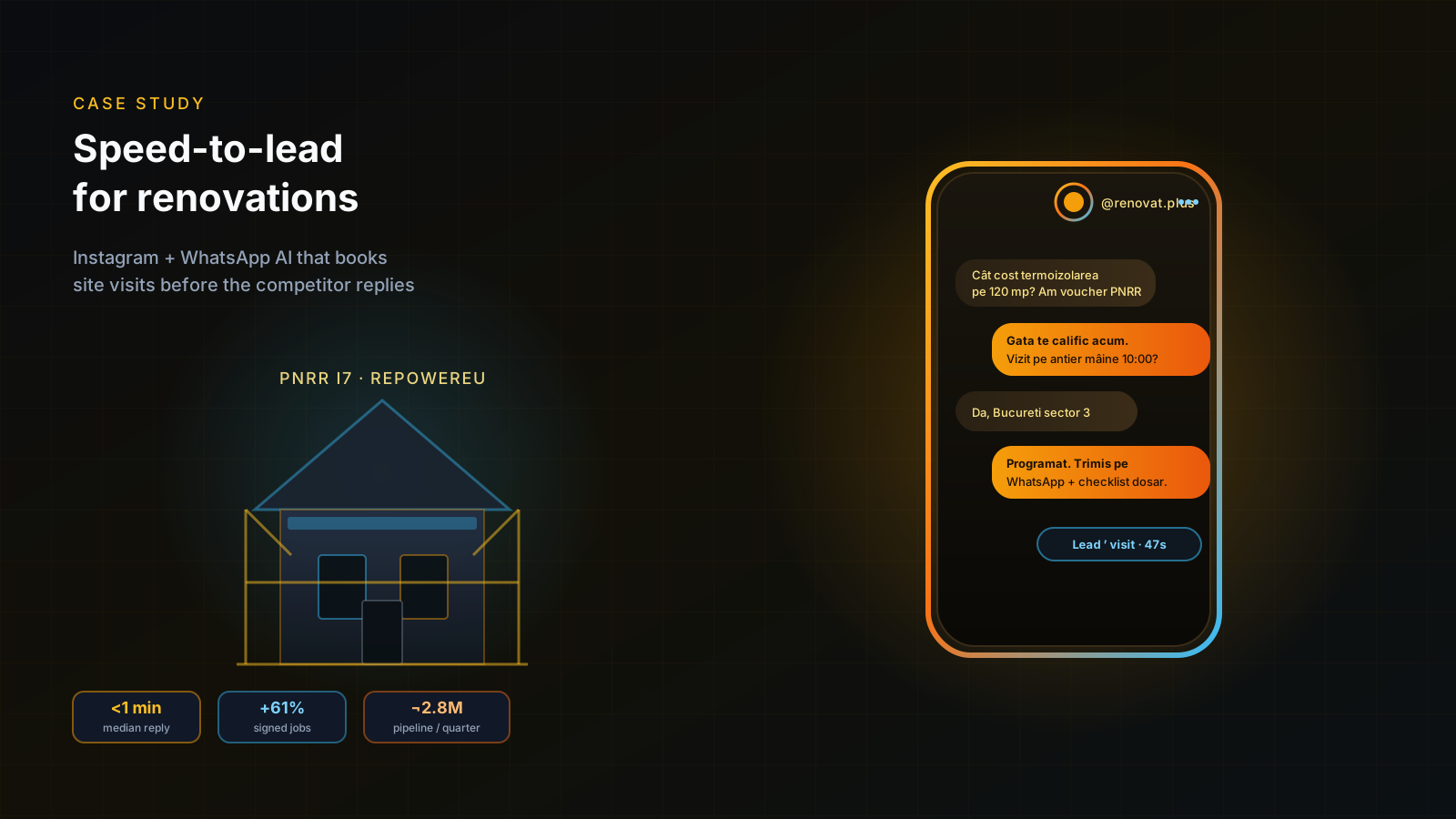
By the end of the first full quarter live, median first reply across Instagram and WhatsApp was under 60 seconds, around the clock. Seventy-three percent of inbound conversations were qualified and either booked, nurtured, or politely closed without a salesperson typing. The commercial pair stopped living inside the inbox at midnight and started living on site visits that already knew the scope.
Signed renovation pipeline for the quarter hit €2.8M — a 61% lift versus the prior quarter on roughly the same ad spend. Site-visit show rate climbed to 81% once confirmations and photo checklists were automatic; the old pattern of 'ghosted driveway appointments' fell hard. The founder’s favourite metric was uglier and more honest: overnight high-intent DMs that used to walk to a competitor were now converting inside their own funnel at a rate the sheet could finally show.
The PNRR-shaped leads stopped being a panic. Homeowners who mentioned vouchers arrived at the first call with a partial dossier already staged, which cut average time-to-quote on energy-efficiency jobs from 9 days to 3. The firm did not pretend the national August 2026 completion pressure was easy — nobody in the trade did — but it stopped losing the jobs that were still winnable because a Reel comment sat on read until Tuesday.
Compliance got quieter, which is how you want it. e-Factura B2C on consumer advances stopped being a Friday fire drill, and the sales scripts disclosed that an assistant helps with first replies — a small transparency line that kept ANPC and Meta-policy nerves down while the agent did the boring work.
What we'd do differently
We let the agent share 'from–to' price bands a little too early in week two. A few homeowners treated the bottom of the range as a promise, then bristled when the site visit came in higher after hidden moisture or non-compliant existing insulation showed up. We moved ranges behind a short scope gate (photos + m² + building year) and labelled every figure as indicative until an estimator visits. In renovation, a premature number is not helpful — it is a future dispute.
We under-estimated how often Instagram voice notes arrive after 21:00 from tired homeowners. The first version was text-only and stalled those threads. Adding voice-note transcription (with a clear 'we read your note' ack) recovered a chunk of after-hours intent we were accidentally dropping.
The line we would underline for any contractor still answering DMs by hand in 2026: automate the race to the first useful reply and the calendar, not the craft. A human still prices the facade, still promises the finish date, still signs the contract. The agent’s job is to make sure you are in the conversation before the homeowner has already booked your competitor’s Tuesday morning slot — because in this market, that Tuesday slot is the business.
"We were losing jobs at 22:00 to whoever typed faster, not whoever built better. The AI does not hang rockwool — it just makes sure we are the first serious answer in the DM. That alone paid for the quarter."
— Commercial Director, residential renovation firm