The problem
Interior design in Romania in 2026 is an Instagram business that still runs on WhatsApp. A single before/after kitchen Reel — beige oak, integrated appliances, a soft morning pan — can pull 800–2,000 comments in forty-eight hours, half of them one-word intent signals: PREȚ, COST, PREȚURI, CONSULT, BUDGET. The atelier's three designers were already on site six days a week. By the time someone opened Instagram at 21:40, the warmest comments were twelve hours cold and half the DMs had already booked a competitor who answered in under a minute.
The second leak was the photo-quote spiral. A prospect who DM'd three phone photos of a 1990s kitchen expected a number. The team used to answer in free-form WhatsApp: clarify city, ask for m², ask which walls move, ask about plumbing, ask about appliances, send a soft range, get three more photos, revise the range, schedule a call. Fourteen to twenty-two outbound bubbles was normal before a site visit was even on the calendar. That pattern was already exhausting in summer 2026, when service replies inside the 24-hour window were still free. It became existential once Meta published the October rate card.
On 1 September 2026 Meta confirmed what the industry had been bracing for: from 1 October 2026, every non-template service message delivered on the WhatsApp Business Platform is billable at the market's utility/authentication rate. For a Romanian recipient that is €0.0239 (~$0.029) per delivered message, with no volume tiers. Each business phone number gets 1,000 free service messages per month — they do not roll over — and a WABA without a valid payment method by 30 September simply stops delivering. For an atelier burning ~18 free-form replies per lead across 220 Instagram-origin conversations a month, the October run-rate looked like a second junior salary spent on typing.
Two more pressures stacked on top. First, e-Factura B2C: residential clients are consumers, so every advance and final invoice has to land in SPV ANAF as structured XML — the old 'factura pe email când apucăm' habit was already a fine risk. Second, EU AI Act Article 50: anything that chats like a person has to disclose that it is AI in the first message. The founder had also tried Meta's own Business Agent for a week in July; token billing at roughly four to five cents per chatty FAQ reply made the economics worse than Cloud API plus a grounded agent, and the model kept inventing millwork lead times the workshop could not meet.
The brief we wrote on the whiteboard was short: answer every Reel comment before the prospect scrolls away, stop quoting binding prices from photos, collapse the 18-bubble spiral into one structured Flow, keep a human on every formal offer, and make the October Meta bill boring instead of scary.
What we built
We did not replace the atelier's creative process — moodboards, site measures, supplier negotiations stayed human. We wrapped an AI concierge around Instagram and WhatsApp that owns discovery, qualification, range-setting, and scheduling, then escalates the moment money or design judgment is required. The bot collects; the designer decides.
Three hard rules from day one. First: ranges only from photos — never a binding lei or euro figure locked from a DM gallery. Second: Art. 50 disclosure in the opening sentence of every automated thread. Third: Meta Business Agent is off the table for FAQ volume; we run a grounded agent on Cloud API with WhatsApp Flows so each lead costs a handful of structured interactions, not a novel of free-form bubbles.
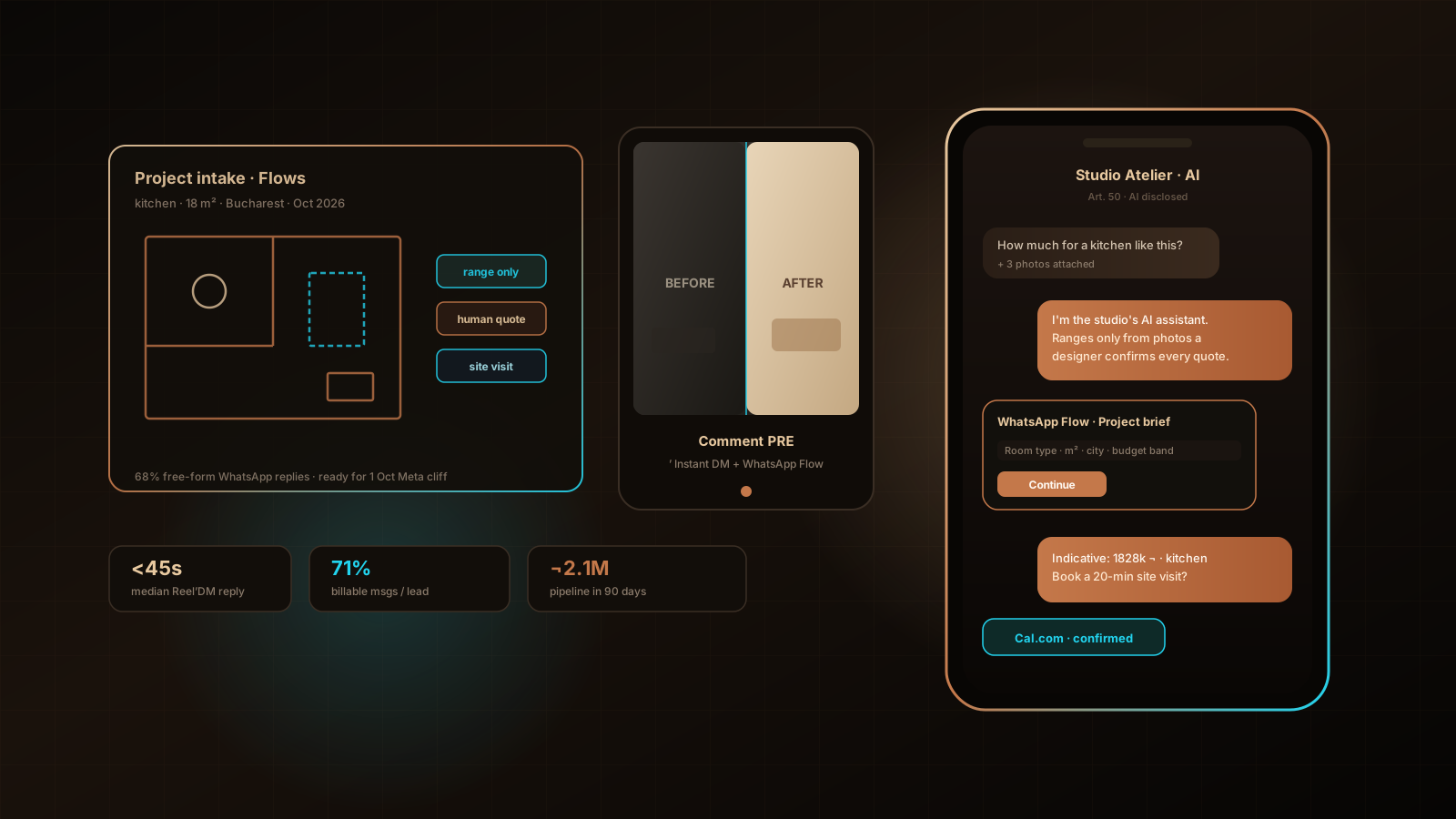
- Instagram Reel comment-to-DM: scoped keyword triggers (PREȚ, PREȚURI, COST, CONSULT, BUDGET, INFO, PRET) on the studio's top-performing before/after Reels fire a Private Reply within seconds, disclose the AI, and hand the prospect a deep link into WhatsApp — median comment→DM under 45 seconds, 24/7, including when the team is on a dusty site in Pipera
- WhatsApp Flow project brief: one native multi-screen form captures room type (kitchen / living / full apartment / office), carpet area band, city & sector, timeline, budget band, and whether the prospect wants design-only or turnkey fit-out — collapsing 14–22 free-form replies into a single Flow open plus one confirmation bubble
- Range engine with guardrails: the agent returns an indicative EUR band grounded in the atelier's internal rate card (by room type × m² band × city tier), always labelled 'indicative — designer confirms after site measure,' and refuses to lock millwork, marble, or electrical allowances from photos alone
- Human quote desk: every formal offer, contract, and supplier reservation is drafted for the lead designer; the AI may schedule, never sign. Upset clients, refunds, and scope disputes hard-stop to a person
- Cal.com site-visit booking: qualified leads pick a 20- or 40-minute slot; confirmations and T−24h / T−2h reminders go out as utility templates where appropriate, keeping October service-message burn on the conversation that actually needs free-form text
- Portfolio & expectation pack: after the Flow, the agent sends a short PDF of comparable projects in the same budget band — so prospects self-select before the designer spends a Saturday morning on a tire-kicker
- e-Factura B2C queue: advances and final invoices draft as structured XML against the client CNP/CUI, reviewed by the studio manager before SPV ANAF submit — same-day for cash and card takes
- October cost cockpit: a simple dashboard counts service messages vs. the 1,000 free tier per number, flags WABA payment-method health before 30 September, and simulates October spend from the last 30 days of traffic so the founder sees the bill before Meta sends it
- Quality + ban hygiene: templates for reminders, clear opt-in language, and a 'talk to a designer' escape hatch on every turn — protecting the WABA quality rating that Meta uses to throttle outbound reach
The results after 90 days
We measured a full quarter ending early September 2026 — close enough to the cliff to stress-test the October model on real traffic. Instagram-origin conversations hit 240 in the busiest month; median Reel comment→DM stayed under 45 seconds around the clock. Free-form WhatsApp replies per qualified lead fell 68%, which is the number that matters once every bubble has a price tag.
On a simulated October rate card using the studio's actual August mix, projected Meta messaging cost per qualified lead dropped 71% versus the old free-form habit. The 1,000 free service messages per number now cover the long tail of true exceptions; the bulk of intake never leaves the Flow. The founder added the WABA payment method in the first week of September and stopped waking up worried about a 30 September delivery freeze.
Commercially, the pipeline did the talking: 186 paid site visits booked through Cal.com, a 34% visit→offer rate, and €2.1M in design + fit-out work either signed or in formal offer across kitchens, two full apartments in Nordului, and a 180 m² boutique office in Brașov. The atelier did not hire an inbox manager. Two junior designers got evenings and Saturdays back for actual drawing.
Compliance stayed boring in the best way. Every automated first message named the AI. No binding price ever left the chat from a photo alone — the one early incident where a contractor-prospect screenshot an indicative range as 'the quote' was caught in the designer review step before a contract went out. e-Factura B2C drafts cleared the same day for advances. And Meta Business Agent stayed unplugged; the grounded Flow-first stack was simply cheaper per resolved FAQ.
What we'd do differently
We initially scoped comment triggers to every Reel on the account. That made 'PREȚ' under a materials-education Reel ambiguous — people wanted the plywood supplier, not a full kitchen project. Scoping triggers to the four highest-intent before/after Reels fixed precision overnight. If you automate Instagram for a design studio, scope keywords per Reel, not per account.
We under-invested in budget-band copy in week one. Too many prospects picked the lowest band as a curiosity click, then ghosted the site visit. Rewriting the bands with plain-language examples ('kitchen refresh with existing appliances' vs. 'full turnkey with new utilities') improved show-up rates by double digits. The Flow is a filter; the words inside it are the product.
The line we would underline for any Romanian design or fit-out studio staring at 1 October 2026: automate the conversation shape, not the creative judgment. Use Flows before Meta meters every bubble. Disclose the AI up front. Never lock a binding price from photos. Put a payment method on the WABA before 30 September. And do not outsource your FAQ firehose to a per-token Business Agent when a structured intake form will do the job for a fraction of the cost.
"Our Reels were doing the marketing; our silence after 18:00 was undoing it. The AI does not design kitchens — it just makes sure every PREȚ comment gets a serious path to a site visit before Meta starts charging us for every bubble we used to waste."
— Founder & lead designer, Bucharest interior atelier