The problem
A Romanian moving company in September 2026 does not lose jobs because the vans are bad. It loses them because someone else answered the WhatsApp first. Our client ran four vans and two trucks out of Militari, covering Bucharest flats, Ilfov houses, and a Friday–Sunday Brasov corridor that fills every autumn when students and corporates reshuffle. Peak season meant ~180 moves a month — and a dispatcher phone that never stopped vibrating.
The lead pattern was brutal and predictable. Someone films a Reel of a before/after empty apartment, comments 'pret?', gets a DM, then dumps twelve photos of a wardrobe, a piano, a fourth-floor walk-up, and a 'we need Saturday morning.' The old workflow was human typing: ask for rooms, ask for floor, ask for elevator, ask for packing, ask for destination parking, send a vague range, wait, chase, lose the job to the firm that quoted in eight minutes at 23:40. Instagram alone left ~400 comments and DMs a week with a median first reply of 4.7 hours. After 21:00 the inbox went dark until the morning shift — exactly when anxious movers are comparing three firms side by side.
Photo chaos was the second leak. Volume estimates from phone pictures are wrong often enough that the team refused to put a firm number in chat — which was correct — but then spent fifteen messages explaining why. Every clarifying ping was another free-form service message. That was fine when Meta priced those replies at zero. It stopped being fine the moment the July 2026 announcement landed: from 1 October 2026, WhatsApp Business Platform service messages bill at the market utility/authentication rate, with Romania as a standalone higher market (~$0.029 per delivered service message after a monthly free tier of 1,000 per business phone number, no rollover).
The owner's napkin math in early September was ugly. At August volumes — roughly 3,400 outbound free-form replies a month across one WABA number — October would burn past the 1,000 free tier in the first week, then stack ~2,400 billable service messages at Romania rates, before marketing templates for reminders. Worse: Meta Business Agent-style token chat was the wrong economics for FAQ volume, and the firm still had no payment method locked on the WABA for the 30 September cutoff. The brief was not 'add a chatbot.' It was 'survive October without going silent, and stop losing Saturday slots to whoever replies first.'
What we built
We did not replace the dispatcher. We replaced the typing. The AI owns first contact, structured intake, photo triage, calendar soft-holds, and paperwork prep. A human still locks every binding price, every piano/specialty item, every dispute, and every e-Factura submission. That split is also what EU AI Act Article 50 expects when a customer is talking to a machine: disclose up front, keep a human on high-stakes money.
The cost strategy for October was deliberate. Free-form chat is the expensive path after 1 Oct. WhatsApp Flows are the cheap path: one interactive form captures rooms, floor, elevator, packing need, origin/destination, preferred date, and photo uploads in a handful of billable steps instead of a twenty-message interrogation. Instagram comment-to-DM opens with the same Art. 50 line and a deep link into the Flow, so Reel virality stops becoming an unpriced typing tax.
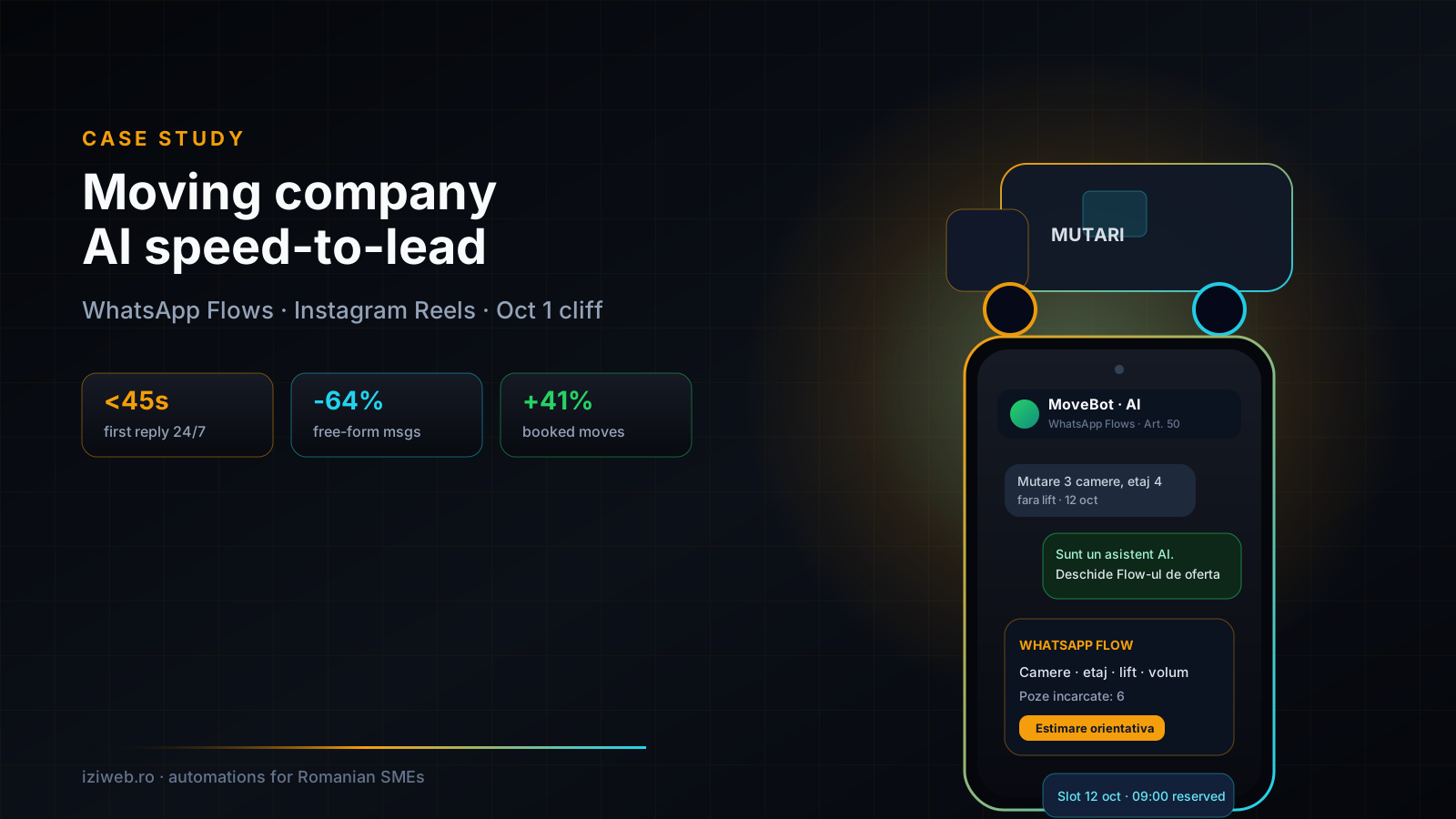
- 24/7 multi-channel first reply on WhatsApp Business API and Instagram Conversations: median under 45 seconds, Romanian + English, with EU AI Act Art. 50 disclosure in the first sentence ('Sunt un asistent AI…') before any qualification
- WhatsApp Flow intake as the default: rooms, floor, elevator yes/no, estimated volume buckets, packing, parking constraints, move date — cutting free-form service replies 64% vs. the August baseline and keeping the number under the 1,000 free monthly tier heading into October
- Photo triage, not photo pricing: the model flags pianos, glass cabinets, narrow stairwells, and 'this looks like 2 vans not 1' — then drafts an estimate range for a dispatcher to approve; the agent is forbidden from locking a binding lei total from images alone
- Instagram Reel comment-to-DM: comments like 'pret', 'disponibil', or a date trigger a contextual DM tied to the Reel, then hand off into the same Flow so social spikes become structured leads instead of inbox chaos
- Crew calendar soft-hold: Cal.com + internal van roster reserves a 2-hour hold on the requested morning; hold converts to confirmed only after deposit or dispatcher approval — no ghost Saturday mornings
- Deposit + confirmation path: Stripe Payment Link or bank transfer instructions for weekend and long-distance jobs; reminders stay inside the customer-care window or use approved utility templates when the window closes
- e-Factura B2C queue: every paid residential move drafts a structured invoice for the office to submit to SPV ANAF the same day — ending the 'bon now, invoice if they ask' habit that already burned them once in 2025
- Ops dashboard for October: live count of free-form service messages vs. the 1,000 free tier, Flow completion rate, and a hard alert if the WABA payment method is missing before 30 September
The results after six weeks
From late July through early September — the window between deciding to act and Meta's cliff — booked moves rose 41% versus the same weeks in 2025, on the same vans and the same headcount. Median first reply collapsed from 4.7 hours to under 45 seconds, 24/7. The after-hours win was the loudest: Saturday and Sunday morning slots that used to fill for competitors at midnight started filling for them, because the Flow was still collecting photos while the team slept.
Message economics flipped. Free-form outbound service replies fell 64% once Flows became the default intake. Projected October service-message volume on the primary number dropped under the 1,000 free monthly tier on the current lead mix — the difference between a scary Romania-rate bill and a rounding error. Marketing and utility templates for day-before reminders stayed on their own rate lines, measured separately so nobody 'saved' service spend by accidentally spamming marketing templates.
Quote quality improved because humans stopped guessing under time pressure. Dispatchers reviewed AI-flagged photo risks in a queue of ~25 minutes a morning instead of living inside chat. Piano and specialty-item jobs that previously blew the margin after a too-low chat estimate now waited for a human call. Show-up rate on soft-held slots hit 93% once deposits were required for weekend Brasov runs.
The softer win was stress. The founder stopped answering Instagram from the passenger seat between Militari and Pipera. The social team kept posting before/after Reels — still the cheapest lead source in the category — without dreading the comment flood. And on 9 September the WABA finally had a payment method on file, which is the unglamorous prerequisite Meta enforces before 30 September if you want messages to keep delivering at all.
What we'd do differently
We almost let the model output a single lei number from photos in week one, 'just as a starting point.' Two underpriced fourth-floor walk-ups later, we locked the rule: ranges only, human confirmation required, and any piano/glass/safe item auto-escalates to a voice call. Speed-to-lead is worthless if you buy the job at a loss.
We under-invested in Flow drop-off analytics at first. Roughly 18% of users stalled on the photo step because the UI asked for 'all rooms' at once. Splitting into origin photos then destination constraints lifted completion 22%. If you ship Flows for movers, treat photo UX as the product — not an afterthought.
The line we would underline for any Romanian mutări firm staring at 1 October 2026: do not answer the cost cliff by sending fewer replies and going quiet. Answer it by moving intake out of free-form chat, disclosing the AI up front, keeping a human on price, and counting every service message against the 1,000 free tier before the invoice arrives. The firms that still run quote-by-typing on 2 October will not just be slower — they will be more expensive per lead than the ones that rebuilt the funnel in September.
"We were losing Saturday jobs to whoever typed fastest at midnight — and October was about to make every extra 'send another photo' cost real money. The AI does not price the move. It just makes sure we are first, structured, and still under Meta's free tier when the bill flips."
— Founder & operations lead, Bucharest moving company