The problem
Romanian e-commerce in mid-2026 looks like three jobs stacked on top of each other. The first is selling: Instagram Reels push a sofa, a Click-to-WhatsApp ad opens a chat, and half the purchase path never touches the website. The second is after-sales: 'where's my order,' 'can I change the colour,' 'the courier left it with the neighbour.' The third — the one that keeps founders awake — is consumer protection. ANPC does not care that your chatbot is 'just a helper.' If a shopper cannot exercise the 14-day right of withdrawal because a bot loops them, that is unfair commercial practice with a paper trail.
Our client ran a Magento storefront with roughly 2,800 home-&-living SKUs, an Instagram Shop that drove most discovery, and three people in customer care sharing a WhatsApp Business number and an Instagram inbox. By June 2026 they were sitting on ~1,100 unread DMs on an average Monday morning. Response time on Instagram after 20:00 was measured in hours, not minutes. Conversion from Reel → paid order sat at 1.8% because the first answer arrived after the impulse had cooled.
They had already tried the obvious shortcut: Meta's native Business Agent on WhatsApp. It answered fast. It also talked like a cheerful colleague named 'Ana,' never said it was AI, and — when a customer asked to return a stained armchair — steered them toward exchange vouchers three turns in a row. Two ANPC complaints landed in July. Neither named the brand publicly, but both cited an 'automated reply that refused to register a return.' Legal counsel's note was short: fix the disclosure and the escalation path before August, or shut the bot off.
Then the calendar got worse. On 1 August 2026 Meta started billing Meta Business Agent messages by token — roughly 4–5 euro cents per chatty reply at Romanian volumes. On 2 August, EU AI Act Article 50 transparency obligations became directly applicable: any chatbot talking to a natural person must disclose that it is an AI system, in clear language, at the first interaction — 'automated assistant' is not enough; the words AI or artificial intelligence have to appear. And on 1 October 2026, Meta will start charging again for every free-form service message inside the 24-hour WhatsApp window. A support team that sends seven short replies to track one parcel was about to pay seven times.
The founder's brief was blunt: keep the speed Instagram customers expect, become boringly compliant for ANPC and Art. 50, and cut Meta spend before October turns the current chatty stack into a line item that eats margin.
What we built
We did not keep Meta's native agent. We replaced it with a short, tool-using commerce agent that sits on our webhook, talks across WhatsApp and Instagram, and treats compliance as a first-class feature rather than a footer. The brand voice stayed warm; the first sentence of every conversation did not.
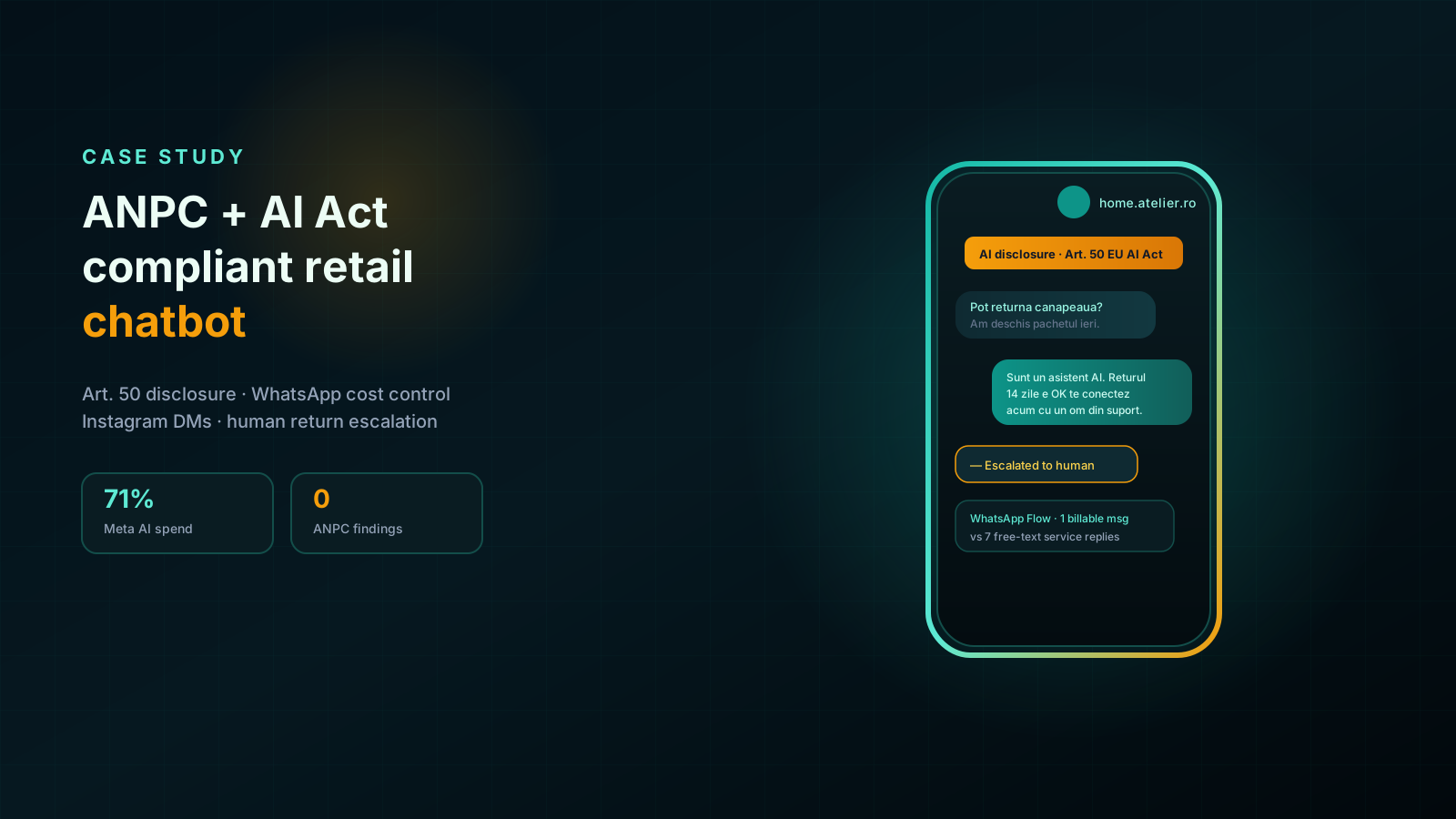
Two non-negotiable rules with the commercial director and counsel on day one. First: message one always discloses — in Romanian and English — that the shopper is talking to an AI system, with a one-tap path to a human. That is Art. 50, and it is also the sentence that kills the 'bot pretended to be a person' ANPC theory. Second: the agent never closes a return, refund, complaint, or price dispute. It collects the order number and photos, opens a ticket, and hands the chat to a named agent within two minutes during business hours (or queues it with an SLA promise after hours). The bot sells and informs. Humans decide money and rights.
- Art. 50 disclosure layer on WhatsApp, Instagram, Messenger, and site chat: first outbound line always includes 'inteligență artificială / artificial intelligence,' a plain-language explanation of what the bot can and cannot do, and a persistent 'Talk to a person' affordance — logged with timestamp for audit
- ANPC-safe returns & complaints router: any intent matching return, withdrawal (retragere), refund, damaged goods, missing parcel, or 'I want to complain' forces an immediate human hand-off with a structured dossier (order ID, photos, delivery date, prior messages) — the bot is forbidden from offering vouchers as a substitute for the legal right of withdrawal
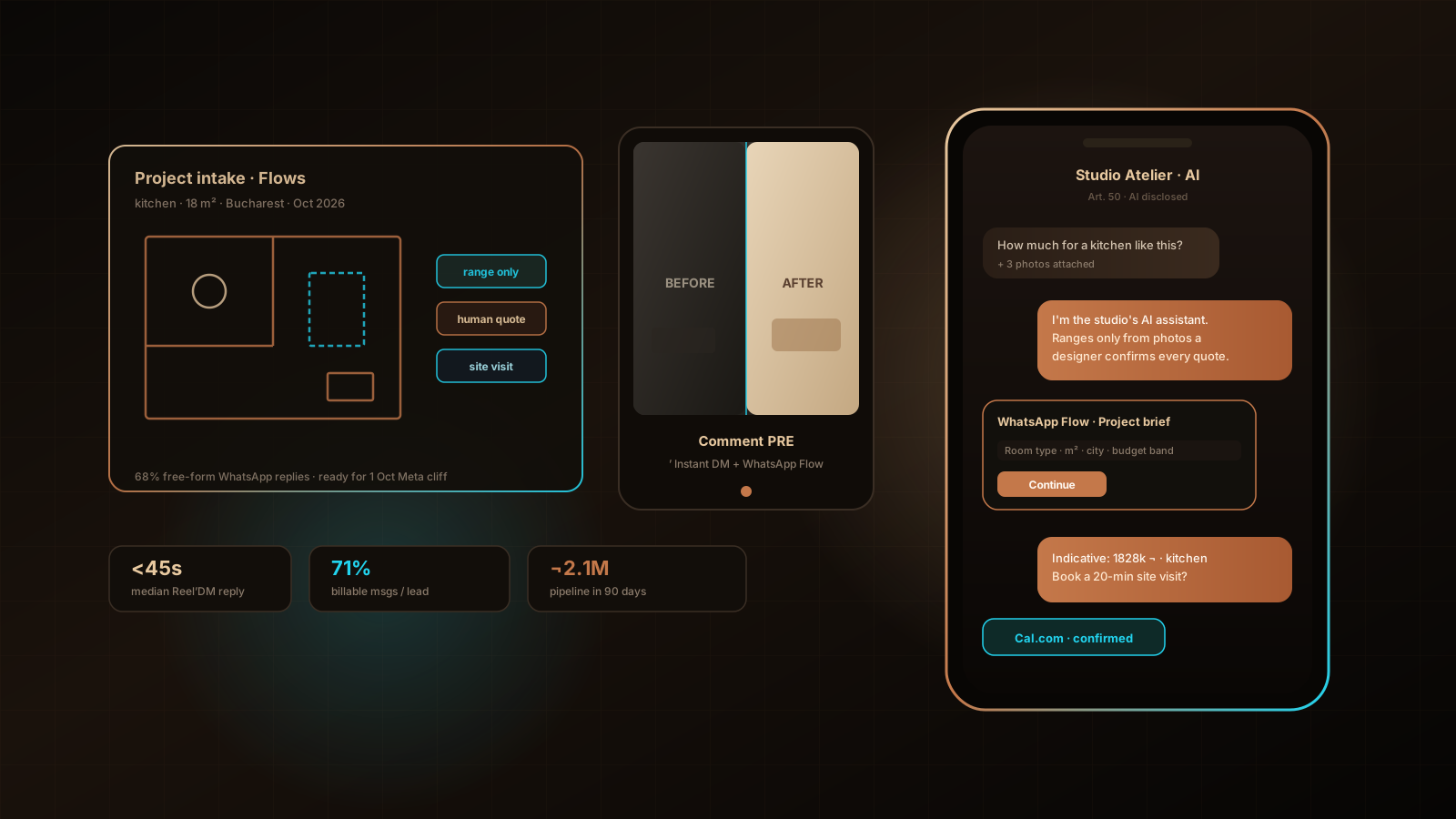
- Instagram + WhatsApp commerce concierge: answers size/material/stock/delivery ETA questions in under 45 seconds, pulls live Magento inventory, and can deep-link a product or open a Checkout session — 79% of routine chats now close without staff
- WhatsApp Flows for the expensive loops: order status, address change, and delivery preference moved into a single interactive Flow instead of a 5–7 message free-text ping-pong — designed specifically so that when service messages become billable on 1 October 2026, each of those journeys costs one message, not seven
- Brief-agent cost control vs. Meta Business Agent: short tool-calling turns on our own model stack instead of long Meta-hosted chats billed per token since 1 August — Meta AI-related spend dropped 71% in the first billing cycle after cutover
- Human-in-the-loop console for care: every escalation lands in a shared inbox with the Art. 50 disclosure already shown, so the human never has to re-explain who is who, and every closed complaint exports a PDF timeline counsel can hand to ANPC if asked
- Promo & deepfake hygiene: AI-generated lifestyle images on Instagram Stories carry a visible 'imagine generată cu AI' label where faces or rooms are synthetic — closing the Art. 50(4) gap that marketing had been ignoring
- e-Factura B2C + return credit notes: when a human approves a refund, the agent queues the corrective e-Factura / credit note against the original SPV document so finance is not reconstructing July's mess from WhatsApp screenshots
The results after eight weeks
By mid-August 2026 the agent was handling 22,600 conversations a month across Instagram and WhatsApp, with a median first reply under 45 seconds, 24/7. Seventy-nine percent of routine chats — stock, ETA, materials, 'does this fit a 2.1 m alcove' — close without a human touch. The three care agents stopped living inside the unread badge and started owning the hard cases: returns, damaged goods, and the occasional angry comment thread.
Compliance was the headline. From 2 August every public chat opened with an explicit AI disclosure. Between go-live and this write-up the brand recorded zero new ANPC complaints about the chatbot, and the two July files were closed after counsel submitted the new escalation logs showing humans — not the bot — deciding every return. Internal counsel's audit of 400 random transcripts found zero instances of the agent offering a voucher in place of the 14-day withdrawal right.
The cost story showed up on the Meta invoice. Cutting Meta Business Agent and collapsing status chats into Flows dropped AI-related WhatsApp spend 71% versus July, even before the October service-message rates land. A dry-run of October pricing on July's old free-text volume put the brand on track for a mid-four-figure monthly surprise; the same volume on the Flow-first design lands under a quarter of that. Instagram remained the acquisition engine — Reel → paid conversion moved from 1.8% to 3.4% once first replies stopped arriving the next morning.
Secondary wins: average handle time on human-escalated returns fell from 14 minutes to 6 because the dossier arrived pre-built; COD refusal rate on furniture SKUs dropped 18% after the bot started confirming delivery floor and elevator access before checkout; and the warehouse in Brașov finally stopped getting WhatsApp voice notes from care asking for tracking numbers that Magento already knew.
What we'd do differently
We soft-launched disclosure as a small grey footnote under the first bubble. It was 'technically present' and legally fragile — Art. 50 wants clear and distinct, not fine print. We moved it into the first sentence in the bot's own voice on day four. If you ship an EU-facing chatbot after 2 August 2026, put the AI words in the first line, not the footer.
We under-estimated how often shoppers paste screenshots of competitor prices into Instagram DMs. The early agent tried to 'match' and wandered into discount promises it could not honour. We locked pricing changes behind a human approve-button and taught the bot to say 'I can escalate a price check' instead of improvising. Margin thanked us.
The line we would underline for any Romanian retailer staring at ANPC, Art. 50, and Meta's October invoice at once: automate the answer and the paperwork, not the consumer right. A disclosed AI that books, tracks, and informs is a growth tool. An opaque AI that negotiates returns on your behalf is a complaint with a timestamp. Build the escalation first — the witty replies second.
"We were one more opaque bot-reply away from an ANPC problem we could not talk our way out of — and one chatty Meta agent away from an October invoice that ate the sofa margin. The AI that worked was the boring one: it says what it is, it never decides a return, and it stopped sending seven WhatsApp messages when one Flow would do."
— Founder & CEO, home & living e-commerce brand