The problem
Romanian law firms discovered Instagram the hard way. A 45-second Reel about unfair dismissal, a speed-camera fine, or an ANPC complaint can pull hundreds of DMs in a night — most of them from people who need a lawyer yesterday and will hire whoever answers first. Our client, a 9-lawyer Bucharest SCA with a strong labour and consumer practice, had turned Reels into their cheapest acquisition channel by early 2026. The problem was not demand. It was that demand arrived at 22:14, while the associates who could answer it were still in a hearing until 18:00 and then offline.
The first leak was speed-to-lead. Internal tracking showed that when a DM sat unanswered past 20 minutes, the conversion-to-paid-consult dropped from roughly 28% to under 9%. Competitors with generic chatbots replied in seconds — and even when those bots gave shaky answers, the lead was already booked into someone else's calendar. The partners estimated they were losing 15–20 solid mandates a month to silence alone.
The second leak was risk. In January 2026 Meta began enforcing task-specific AI on WhatsApp — open-ended 'ask me anything' bots were no longer welcome. On 3 June 2026 Meta launched Business Agent globally across WhatsApp, Instagram, and Messenger. Suddenly every SCA in Bucharest could flip on a free Meta agent. The managing partner's reaction was not excitement; it was dread. A generic agent that answers 'can they fire me while I'm on medical leave?' with a confident paragraph is not a marketing win — it is a secretul profesional, deontology, and malpractice problem waiting to happen. UNBR's own 2025–2026 dialogue on AI had already made the profession's red lines clear: the lawyer remains responsible, AI must not substitute advice, confidentiality stays non-negotiable, and the public must never confuse a bot with an avocat.
The third leak was operations. Intake lived in three Instagram inboxes, two WhatsApp numbers, a website form, and a shared Excel that nobody trusted. Conflict checks were a partner's memory plus a Friday afternoon search in Clio. Fee quotes were typed by hand. e-Factura B2C for individual clients — mandatory since 2025/2026 — was still a Friday scramble for the office manager. By the time Meta's Business Agent news hit their group chat, the firm had already decided they needed automation. What they refused to buy was a chatbot that pretended to be a lawyer.
What we built
We built a task-specific intake agent — not a legal advisor. It owns the conversation, the qualification, the conflict screen, the booking, and the paperwork queue. The moment a prospect asks for an opinion, a strategy, or 'what should I do?', the agent stops generating answers and routes to a human with a structured brief. Every first reply includes a plain-language disclosure: this is an automated intake assistant of the SCA; it does not provide legal advice; only a lawyer of the firm can.
Two rules locked with the managing partner on day one. First: the model never drafts advice, never cites articles of law as guidance to the client, and never estimates win rates. It can collect facts, classify the matter, and explain next administrative steps (documents to bring, consult length, fee range previously approved by the firm). Second: nothing that looks like confidential case facts leaves the firm's EU-hosted processing boundary, and every conversation is logged for GDPR and bar-audit readiness. Those two rules are also what WhatsApp's task-specific policy, the EU AI Act transparency expectations, and UNBR's emerging AI posture all point toward.
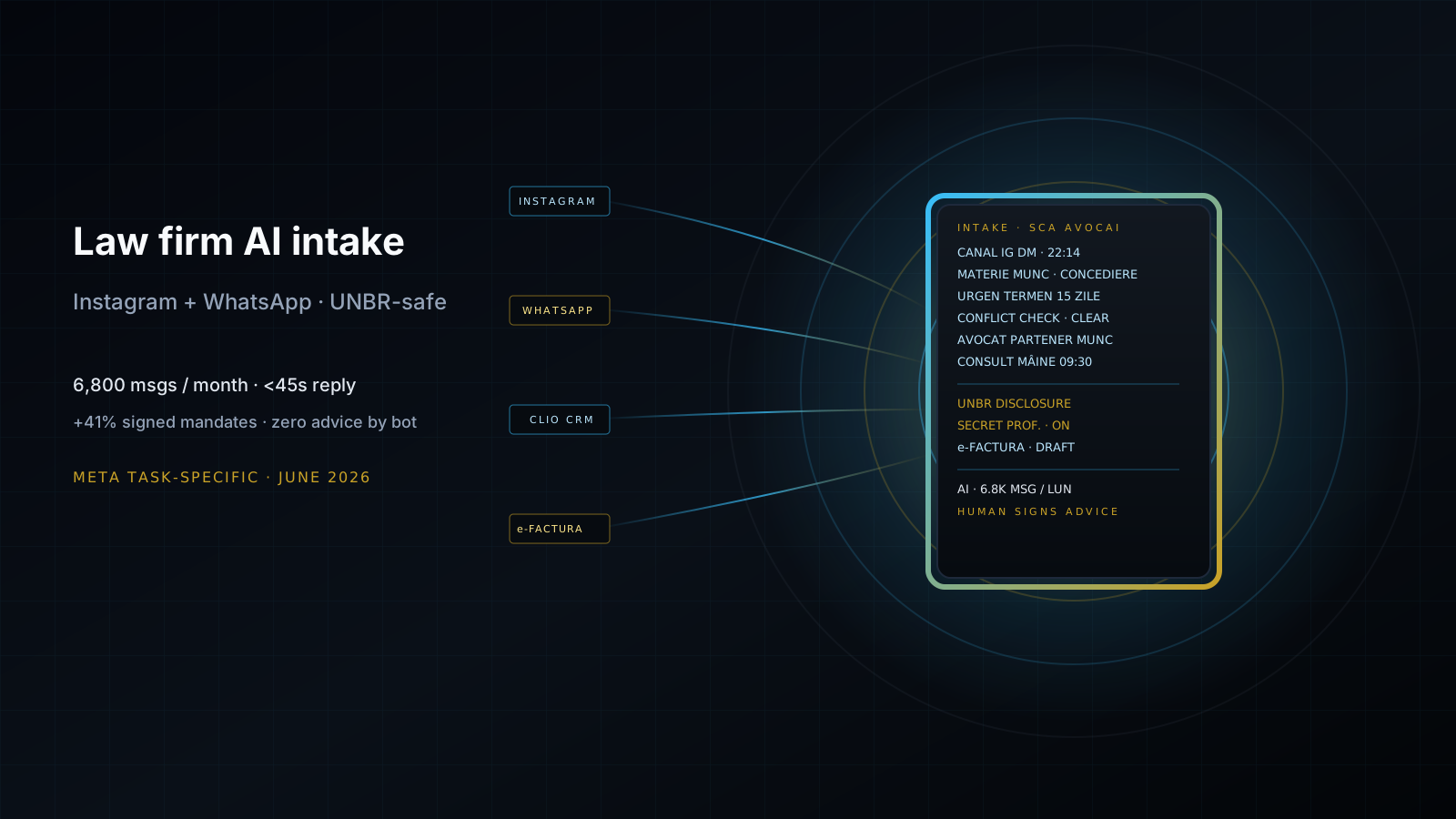
- 24/7 multi-channel intake across Instagram DMs, WhatsApp, Messenger, and website chat: replies in under 45 seconds, qualifies labour / traffic / consumer / commercial matters with a partner-approved script, and books a paid consult straight into Clio with the right practice lead — 78% of messages now close without staff typing
- Hard 'no advice' escalation: any question that seeks a legal opinion, a document review, or a recommendation triggers an immediate hand-off to the on-duty associate with a structured brief (facts collected, deadline flags, opposing party if named) — the bot is not allowed to 'almost answer'
- Conflict-of-interest pre-screen: before a consult is confirmed, the agent checks Clio for matching party names and flags potential conflicts to a partner queue; confirmed conflicts never auto-book
- Deadline radar for high-urgency matters: labour dismissals (15-day contestation windows), traffic appeals, and consumer complaint calendars get priority slots and an SMS/WhatsApp nudge to the assigned lawyer within minutes
- UNBR / transparency disclosure baked into the first reply and the website widget — the client always knows they are talking to an automated assistant of the named SCA, not to 'avocat AI'
- Fee-pack and e-Factura B2C queue: after a consult is held and a mandate is signed, the office manager gets a draft fee note and a structured e-Factura ready for SPV ANAF — no more Friday invoice pile
- Document checklist co-pilot: once a matter type is classified, the agent sends the exact list of papers to bring (CIM, dismissal decision, medical certificates, ANPC file, police report) so the first consult starts prepared
- Human-in-the-loop dashboard: partners see every open thread, every escalation, and every disclosure acknowledgement; nothing that touches advice or money leaves without a lawyer's click
The results after one quarter
By the end of the first full quarter after go-live the agent was handling 6,800 conversations a month across Instagram and WhatsApp with a median reply under 45 seconds, around the clock. Seventy-eight percent of routine intake messages closed without staff, and the three office staff who used to spend mornings clearing overnight DMs were redeployed onto file prep and client onboarding — the work that actually needs a human who knows the file.
Conversion moved with speed. Signed mandates rose 41% versus the prior quarter, driven almost entirely by labour and consumer leads that previously ghosted after waiting overnight. Paid consult no-shows fell 33% because the agent confirmed twice, sent the document checklist, and offered a one-tap reschedule. Average time from first DM to booked consult collapsed from 11 hours to 19 minutes during office hours — and from 'next business day if anyone remembers' to under an hour after midnight.
The risk metrics mattered as much as the revenue ones. Zero legal opinions were issued by the bot — by design, audited weekly. Every conversation carried the disclosure. Conflict flags caught 23 potential overlaps in twelve weeks; four of those would have been embarrassing if a consult had been booked first and discovered later. When Meta's free Business Agent became the dinner-table topic among Bucharest SCAs in June, the managing partner's line to peers was simple: use the channel Meta gives you, but do not outsource judgment to a general-purpose reply engine.
Compliance side-effects showed up too. e-Factura drafts for B2C clients left the same day as the mandate in 94% of cases, and the office manager stopped living inside SPV on Fridays. GDPR subject-access requests that used to take a scavenger hunt across inboxes now pulled from a single conversation log. The firm did not become an 'AI law firm'. It became a law firm that answers at 22:14 without pretending a model is an avocat.
What we'd do differently
We initially let the agent paraphrase 'general legal information' pages from the firm's website when prospects asked broad questions — thinking a paraphrased FAQ was safely non-advice. In review, two replies drifted too close to applying a rule to the prospect's facts. We cut that behaviour entirely. If it is not a scheduling, pricing, document-list, or routing utterance, it escalates. The lesson for any SCA: the dangerous line is not the obvious 'you should sue'; it is the helpful paraphrase that accidentally becomes counsel.
We under-invested in matter-type taxonomy in week one. 'Labour' was too coarse — unfair dismissal, salary claims, workplace harassment, and non-compete disputes need different checklists and different urgency. We rebuilt the classifier with the labour partner and cut misroutes by more than half. If you only remember one implementation detail, make the taxonomy as fine as your practice groups.
The line we would underline for any Romanian firm deciding whether to do this in 2026: automate intake, not advocacy. Meta's Business Agent and WhatsApp's task-specific rules made fast replies table stakes; UNBR, secretul profesional, GDPR, and the EU AI Act make unsupervised legal chat a non-starter. A human signs every opinion, every fee arrangement, every conflict call. The agent is allowed to be wrong about which associate is free at 09:30. It is not allowed to be wrong about whether something was legal advice — which is why it is not allowed to try.
"Instagram was sending us clients at midnight and we were answering them at noon — which means we weren't getting them. The AI doesn't practise law. It just makes sure a lawyer sees the right file before the 15-day deadline dies in a DM inbox."
— Managing Partner, Bucharest SCA