The problem
A Romanian community pharmacy in 2026 is half healthcare counter, half messaging inbox. Compensated prescriptions travel through SIPE, patients show up with a CNP and a health card instead of a pink paper slip, and the question that used to be asked at the counter — 'do you have this?' — now arrives on WhatsApp at 07:12 while the pharmacist is still unlocking the fridge. Our client ran seven independent community pharmacies across Bucharest, Ploiești, and Brașov, filled roughly 48,000 compensated prescriptions a month, and by early summer 2026 the founders' shared Slack was just a rolling screenshot of unread DMs and a photo of the morning queue spilling past the door of the Militari location.
Stock questions were the loudest leak. Roughly 60% of after-hours and morning messages were some version of 'Aveți X?' — a brand name, a DCI, a photo of a crumpled box, occasionally a screenshot of a SIPE code. A human answer meant opening the pharmacy management system, checking the right location, guessing whether the patient would actually come, and typing back. Most mornings, the first 40 minutes of every shift went into that inbox before a single patient was served. Patients who didn't get an answer simply walked into a competing Catena or Dr.Max two streets over — and once they switched for one fill, they rarely came back for the chronic ones.
The counter itself was the second leak. Even with SIPE making paper optional, the physical release still needed a pharmacist: card validation, DCI substitution rules, co-pay explanation, counselling on interactions. When half the people in line only wanted to ask whether something was in stock, the people who actually needed a compensated fill waited behind them. Median wait at the busiest Bucharest location drifted to 18 minutes by June; chronically ill patients started calling the owner directly.
CNAS settlement was the quiet third. Every compensated release has to land correctly in SIPE and in the monthly claim package. Miss a field, mistype a quantity, leave a release hanging overnight because the evening shift was short-staffed, and the claim ages. By Q2 2026 the chain was closing roughly 9% of fills after the preferred same-day window, which meant cash tied up, reconciliation fights with the county CAS, and one near-miss audit letter that made the co-founder cancel a weekend. e-Factura B2C on every cash OTC sale added a second clock on top.
Then 20 July 2026 made the calendar real. Law 157 completed Article 280 of Law 95/2006 and put CNAS's 'e-SănătateaMea' portal — including a mandatory electronic patient-scheduling surface for every contracted provider — on a Q4 2026 go-live, with a pilot already running. Pharmacies are not hospitals, but any CNAS-contracted provider that touches patient scheduling, prescription status, or digital health records is suddenly on the same digital clock. The founder's brief at kickoff was blunt: 'we either own the patient conversation and the claim close before Q4, or we spend the autumn reacting to a portal we didn't design for.'
What we built
We did not replace the pharmacy management system or SIPE. The pharmacists trust both, and CNAS will not negotiate a third stack. We wrapped an AI agent around live inventory, WhatsApp, Instagram, and the claim close — and we drew a hard line the medical director of the chain insisted on from day one: the AI never counsels, never substitutes a DCI on its own, and never releases a compensated prescription. It prepares; a pharmacist signs.
That line is also exactly what the EU AI Act expects of a system sitting this close to a health decision. By 2 August 2026 the transparency and human-oversight obligations for high-risk and health-adjacent AI stop being a slide deck and start being an audit question. Every patient-facing reply discloses that an assistant is involved, every SIPE draft sits in a pharmacist queue, and every claim package is reconciled by a human before it leaves the building.
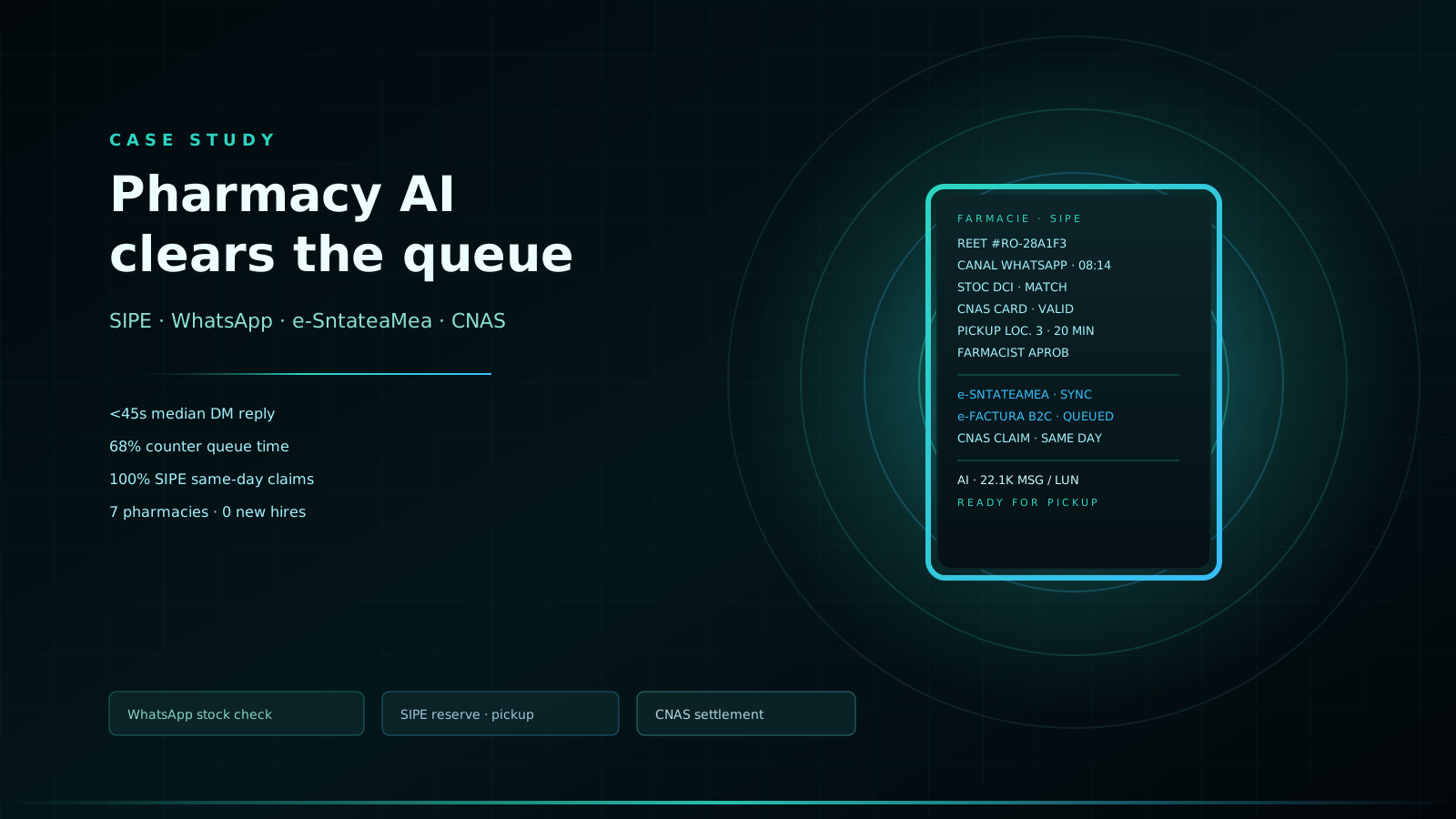
- 24/7 stock-and-pickup concierge across WhatsApp, Instagram, and the website chat: answers 'Aveți X?' against live inventory at the nearest of the seven locations in under 45 seconds, offers a same-day pickup window, and holds the units for 90 minutes — 79% of stock DMs now close without staff typing a word
- SIPE-aware reservation layer: when a patient shares a prescription code or CNP + card intent, the agent matches available DCIs against the chain's substitution rules, drafts the release packet (product, lot preference, co-pay estimate), and parks it in the pharmacist's approval queue — no release leaves without a human click
- Counter-load balancer: patients with a reserved pickup skip the 'do you have it?' queue and go straight to a labelled window; walk-ins who only need an OTC recommendation still see a human — median wait at Militari fell from 18 minutes to under 6 within six weeks
- Chronic-therapy refill nudges: for patients who opted in, the agent watches expected refill windows, checks stock two days ahead, and offers a pickup slot before the box runs out — missed chronic fills dropped 41% in the first month
- Same-day CNAS claim closer: every approved SIPE release triggers a checklist that closes the claim fields the same evening, flags anomalies (quantity drift, missing card validation, substitution without note), and packages the county CAS submission — 100% same-day close since go-live, zero aged fills into the next month
- e-Factura B2C engine for OTC and private Rx cash sales: drafts the structured invoice into SPV ANAF the same day, reconciled against the till — so the B2C mandate stops being a Friday-night panic
- e-SănătateaMea readiness layer: patient identity, prescription status, and booked pickup slots are kept in a shape the Q4 CNAS portal can consume, so the chain is not rebuilding its patient surface under a hard deadline in October
- Pharmacist co-pilot, not pharmacist replacement: interaction flags, pregnancy/allergy prompts from the patient's declared profile, and 'refer to pharmacist' hard stops on anything that smells like counselling — the AI is allowed to be wrong about which shelf holds the ibuprofen; it is not allowed to advise on it
The results after six weeks
By late July 2026 the agent was handling 22,100 conversations a month across the seven pharmacies, with a median stock-check reply under 45 seconds, around the clock. Seventy-nine percent of routine stock and pickup messages now close without staff, and the morning inbox that used to eat the first 40 minutes of every shift is mostly a short approval queue for the pharmacist on duty.
The counter changed shape. Militari's median wait fell from 18 minutes to under 6; the Brașov location, which used to lose elderly chronic patients to the queue, reported the first month in two years where the owner wasn't personally apologising on Facebook. Reserved pickups now account for roughly a third of compensated fills on weekdays, which means the people standing in line are mostly the ones who actually need counselling — exactly the work the pharmacists trained for.
Claims stopped ageing. Same-day SIPE / CNAS close hit 100% in the third week and held; the near-miss audit letter from Q2 became a non-event in the July package. OTC e-Factura stopped being a weekend chore. And because the patient conversation finally had a memory — which location, which DCI, which pickup window — the chain picked up a measurable return of chronic patients who had drifted to the big chains during the unread-DM months.
The strategic win sits on the July 20 calendar. With Law 157 on the books and e-SănătateaMea's Q4 obligation visible, the chain is not starting from spreadsheets in October. Pickup slots, prescription status, and patient identity already move through a single layer the portal can plug into. Two neighbouring independent pharmacies asked for the same stack before the end of the month.
What we'd do differently
We let the agent suggest a brand-name substitute too early — 'we don't have Brand X, but we have Generic Y in stock.' It was correct on inventory and wrong on trust. Several patients heard a sales pitch where they wanted a pharmacist. We rewrote the script so that any substitution path ends with 'a pharmacist will confirm the alternative with you at pickup' and never names a substitute in the chat. If you automate pharmacy stock, remember: availability is a machine job; substitution is a licence.
We under-estimated how often patients send a photo of a box instead of a DCI or brand string. OCR on crumpled foil blister packs failed more than we budgeted for in week one. We added a graceful fallback — 'I can't read the pack clearly; reply with the name on the box or forward the SIPE SMS' — and cut failed photo lookups by half. Build the boring fallback before you polish the vision model.
The line we'd underline for any Romanian pharmacy deciding whether to do this before e-SănătateaMea goes live: automate the conversation, the reservation, and the claim close — not the counselling and not the release. A pharmacist signs every compensated fill, every substitution, every claim package CNAS will read. The agent is allowed to be wrong about which of seven fridges holds the insulin. It is not allowed to be wrong about whether the patient should take it — and the cheapest way to keep that line clean is to refuse to even try.
"We were answering 'Aveți X?' by hand at 7 a.m. and still losing the patient to the chain across the street. The AI doesn't practise pharmacy — it just makes sure the right box is reserved and the right pharmacist sees the release before the queue forms. That, and closing every SIPE claim the same day, is what bought us July back."
— Co-founder & coordinating pharmacist, 7-location pharmacy chain