The problem
Romanian wedding planning in 2026 is an Instagram business that happens to involve flowers. Couples do not start with a Google search for 'wedding planner Brașov' anymore — they save a Reel of a castle courtyard in Bran, a lakeside dinner in Sibiu, or a candlelit barn outside Cluj, screenshot the handle, and DM at 23:40 after a glass of wine. Our client — a four-person atelier splitting time between Brașov mountain venues and Bucharest city halls — had turned that pattern into a real book: roughly 28–32 weddings a year, a healthy waitlist for September Saturdays, and an Instagram account that pulled 8,000–14,000 Reel views on a good post.
The pain was not demand. It was the shape of demand. Between March and October the studio's Instagram inbox averaged 90–140 new threads a week: availability checks, budget fishing, 'can you just do day-of?', destination couples writing from Germany or Italy in mixed English and Romanian, and a long tail of 'how much for 80 guests?' with no date attached. The founders answered what they could between site visits. Everything that arrived after 20:00 waited until morning — and by morning, the couple had already booked a competitor who replied from the parking lot of another venue.
Qualification was the quiet leak. A full-planning package for this studio starts in a range that is not for every couple, and a destination Transylvania weekend sits higher still. Without a structured intake, the team spent hours on discovery calls with couples whose budget was half a day-of fee, or whose date was already sold out, or who really needed a photographer referral, not a planner. The CRM was a Notion board updated 'when someone remembered.' Deposits lived in email threads. Vendor status lived in the planners' heads.
Then August 2026 stacked two cliffs eight days apart. During Meta's free July build-and-test window the studio had turned on Meta Business Agent across Instagram and WhatsApp — it felt like magic on a Saturday night when a viral Reel about a Brașov fortress wedding pulled 2,400 comments and the agent answered every 'price?' ping. On 1 August the free window closed. Meta started billing Business Agent at $2.00 per million tokens, which in practice lands around 4–5¢ per delivered AI reply once you count the 20–25k tokens a typical multi-turn DM burns. Their first week-of-August invoice looked like a small marketing campaign, not a chatbot experiment — because the same Reels that made the free month feel successful now multiplied token spend with every comment-to-DM cascade.
On 2 August, EU AI Act Article 50 transparency obligations became applicable: systems designed to interact directly with people must inform them they are talking to AI unless it is obvious from context. The studio's Meta agent had a soft 'assistant' tone and no clear first-message disclosure. ANPC and consumer-facing enforcement talk in Romania had already put chatbots on the radar for unfair commercial practices; the founders did not want the first time a couple learned they had been talking to a bot to be the deposit invoice. The brief we got was blunt: keep the 24/7 inbox, kill the surprise bill, disclose the AI, and stop losing qualified Saturdays to overnight silence.
What we built
We did not leave them on Meta Business Agent as the primary brain. Native Meta AI is fine for FAQ volume; it is a bad fit for a studio whose every wrong 'yes, we can do that date' can double-book a September Saturday and whose every endless chat burns tokens with no deposit at the end. We built a custom concierge on WhatsApp Business API + Instagram Messaging API, with short deterministic flows for the expensive paths and a small LLM only where language flexibility earns its keep — and with a hard monthly token ceiling the founders can see on a phone.
Two non-negotiables from day one. First: every first inbound message — Instagram or WhatsApp — opens with a clear Art. 50 line in the couple's language (RO/EN): they are chatting with the studio's AI assistant, a planner will join for pricing, contracts, and creative decisions. Second: the AI never invents availability or quotes a firm price. It checks a live calendar, offers package ranges the studio published, and hands money talk to a human. The bot qualifies and books the call; the planners sell the wedding.
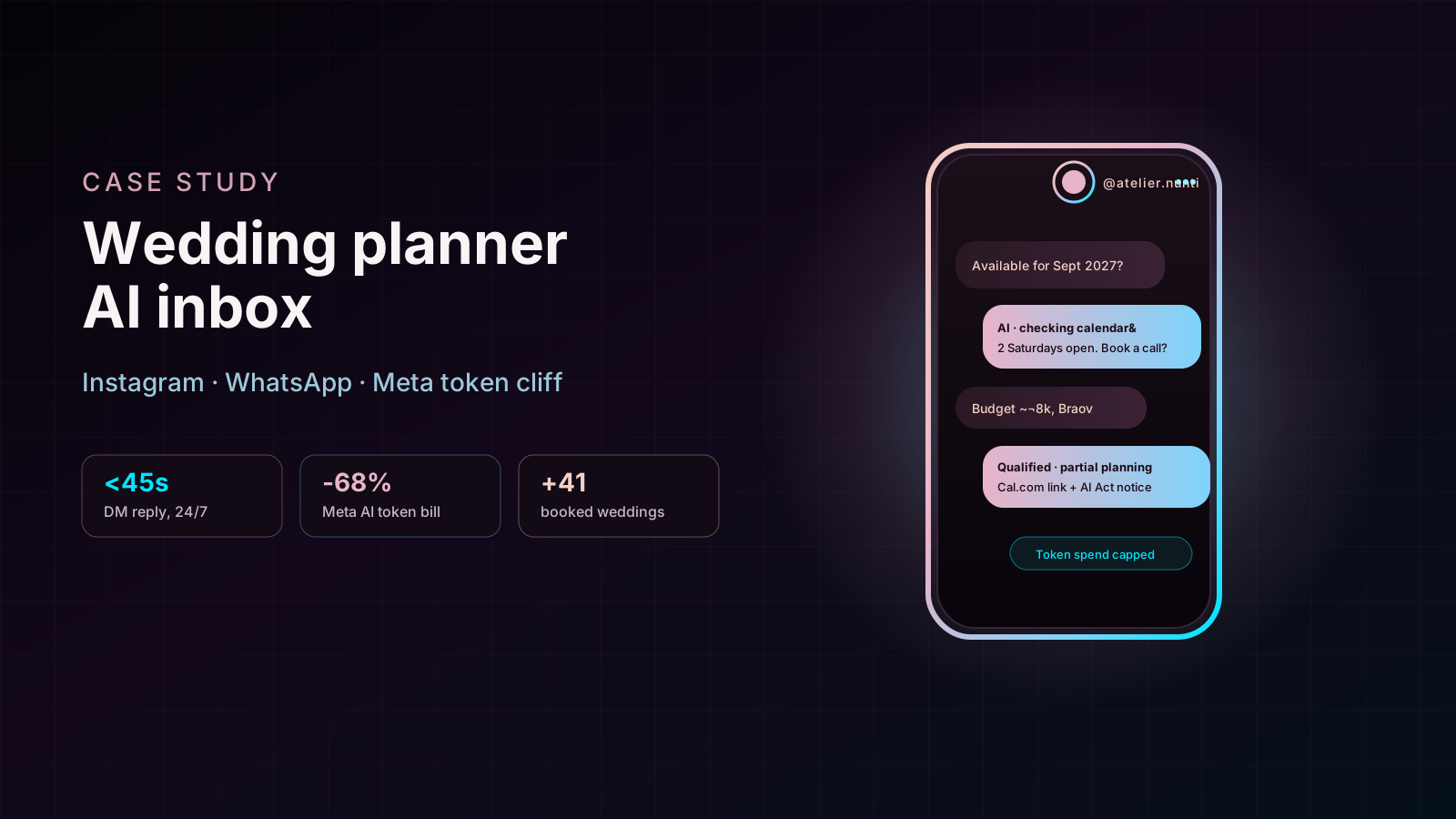
- 24/7 Instagram + WhatsApp concierge with <45s median first reply: greets in RO or EN, shows the AI Act disclosure immediately, and asks the four qualification questions that actually matter — wedding date (or month), city/venue if known, guest-count band, and budget band for planning (not for the whole wedding)
- Comment-to-DM capture on Reels and carousels: keywords like DATE, PREȚ, PACKAGES, BRAȘOV, DESTINATION unlock a structured DM instead of an open-ended token burn — so a viral Reel creates leads, not a surprise Meta invoice
- Live availability gate against a shared Cal.com + Google Calendar of sold / hold / open Saturdays: if the date is gone, the agent says so in one turn, offers two nearby open dates or a waitlist, and optionally refers a trusted planner partner — no multi-turn 'let me check with the team' theatre that racks up tokens
- Package router: full planning vs. partial vs. day-of vs. Transylvania destination — each path gets a short PDF/one-pager and a Cal.com discovery link only when budget + date clear a minimum bar the founders set; below the bar, a polite self-serve guide and photographer/florist referral list
- Token & cost guardrails the Meta free-window hangover taught us: max turns per conversation before forced human hand-off, summarisation instead of re-sending the full portfolio in every reply, cache of FAQ answers, and a hard monthly spend cap with Slack alert at 70% — Aug–Oct Meta AI line item dropped 68% vs. the first post-billing week extrapolated
- WhatsApp thread for booked couples: timeline reminders, vendor questionnaire links, mood-board uploads, and e-Factura B2C drafts for deposits and final invoices — so the inbox that used to mix cold leads with 'where is the cake tasting?' finally split into sales vs. delivery
- Planner cockpit in Notion + Pipedrive: every qualified lead lands with date, budget band, package intent, language, and source Reel — so Monday morning starts with a ranked call list, not archaeology in Instagram
- Human escalation rules: pricing negotiation, contract edits, creative direction, distressed couples, and anything mentioning a refund or ANPC complaint jumps to a planner within minutes during working hours and pages on-call after 22:00 for same-week weddings
The results after one peak season
By the end of October 2026 the studio had booked 41 weddings for 2026–2027 dates — up from 29 in the same booking window the year before — with the same four people. Median first reply across Instagram and WhatsApp sat under 45 seconds around the clock. Seventy-one percent of routine availability and package questions closed without a planner typing. Discovery-call show-up rate rose because couples arrived already filtered on date and budget; the founders stopped spending Tuesday evenings on calls that were never going to convert.
The Meta bill was the emotional win. The first week after 1 August, extrapolated, would have made Business Agent one of their top three software costs for the autumn. After the rebuild — comment-to-DM keywords instead of open chat on every comment, turn caps, cached FAQs, and routing serious couples to WhatsApp where the custom agent is cheaper to run — Meta AI token spend for August–October landed 68% below that hangover baseline. They still use Meta's native agent for a narrow FAQ whitelist; everything that smells like a sale runs on the controlled stack.
Compliance stopped being a worry they postponed. Every first touch carried the Art. 50 disclosure in RO or EN, logged in the conversation transcript. When one couple asked mid-chat whether a human was writing, the agent repeated the disclosure and offered an immediate planner hand-off — which is exactly the behaviour consumer-protection conversations in Romania now expect from chatbots that influence a purchase. Deposits and final invoices went out as e-Factura B2C the same day, tied to the Pipedrive deal.
Speed-to-lead showed up in the calendar. Of the 41 booked weddings, 18 started as an Instagram comment or DM outside office hours — the exact slice the studio used to lose. Two destination weekends from couples writing in English from Munich and Milan closed without a single missed overnight reply. The coordinators got their evenings back during ceremony weeks; the founders got their September Saturdays back as inventory they could actually sell, not apologise for.
What we'd do differently
We under-estimated how addictive open-ended Meta Business Agent chats feel during a free month. The July window trained the audience — and the team — that every comment deserved a witty paragraph. When billing started, that habit became the bill. If we replayed the project, we would have launched the keyword comment-to-DM funnels and turn caps in July, while it was still free to measure real token curves, instead of discovering the curve on the first paid invoice.
We let budget bands stay too vague in week one ('under €3k / €3–7k / €7k+'), which still let soft leads book discovery calls. Tightening to package-specific floors — and requiring a date or month before Cal.com unlocks — cut no-show curiosity calls by roughly a third. Wedding sales cycles are long; the automation's job is not to be endlessly polite to every saver of a Reel. It is to protect planner hours for couples who can actually buy.
The line we would underline for any Instagram-native service business in Romania in late 2026: treat Meta's native agent as a channel, not a strategy. Token pricing rewards short, structured conversations; EU AI Act Article 50 rewards honest disclosure on first touch; your Saturday inventory rewards a calendar the bot cannot hallucinate. Automate the inbox and the qualification. Keep the deposit, the creative call, and the 'yes, we will take your date' human.
"July made Meta's agent feel free and clever. August made it feel expensive. The custom inbox keeps the 24/7 replies, tells every couple they are talking to AI, and stops a viral Reel from becoming a surprise invoice — which is how we finally sold the Saturdays we used to lose overnight."
— Co-founder & lead planner, wedding studio